
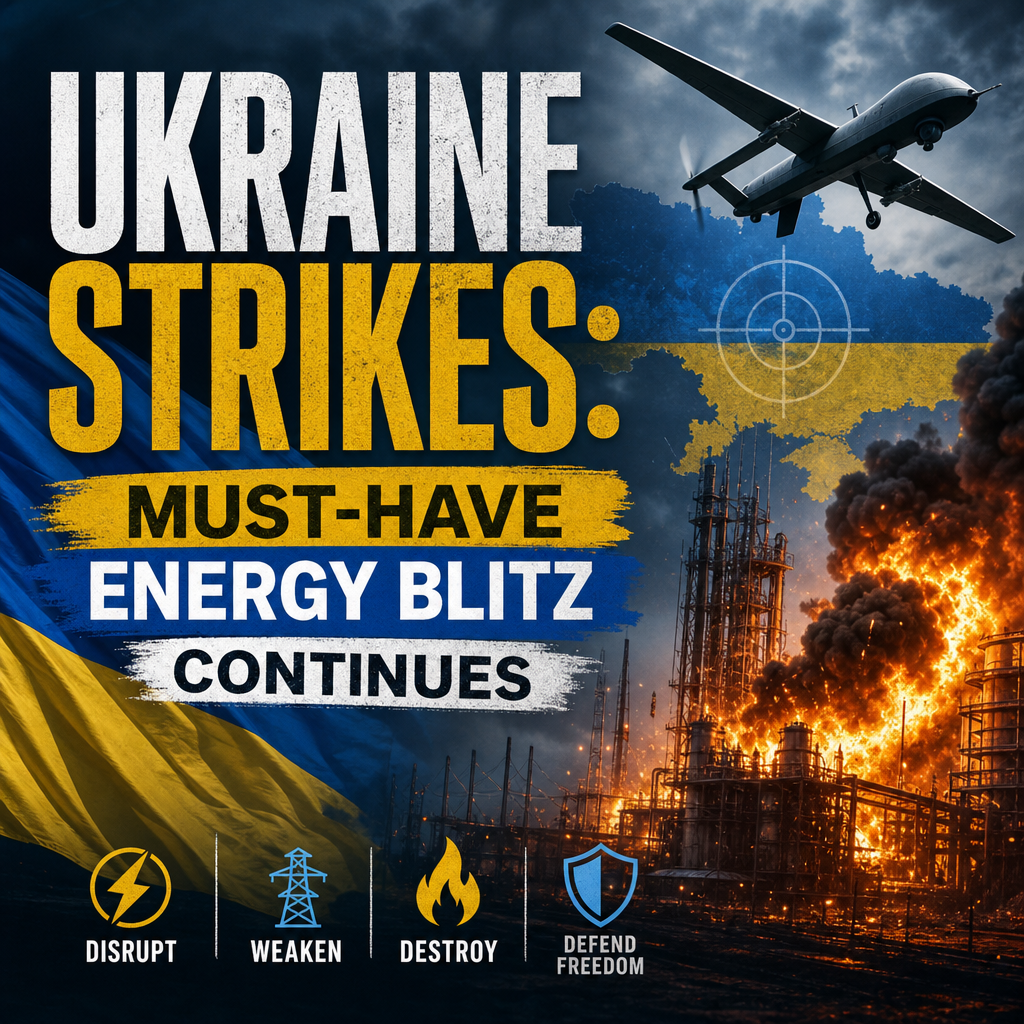
Ukraine Strikes: Must-Have Energy Blitz Continues


Ukraine Strikes have once again pushed energy infrastructure to the center of the war, underscoring how both sides still see fuel, transport, and export routes as strategic pressure points rather than off-limits civilian backdrops.
The latest attacks and counterclaims show that the conflict is not only being fought on the front line but also in ports, pipelines, refineries, and terminals tied to Russia’s broader energy system. According to recent reporting from Al Jazeera, Ukraine says it will continue targeting Russian energy assets after a strike on a sea terminal, arguing that these sites help finance Moscow’s war effort. Russian state-aligned coverage, by contrast, presents such attacks as reckless escalation and an assault on economic stability. Sky News’ reporting has tended to place these strikes in the wider context of the war’s changing tactics, highlighting both their military logic and their risk of widening economic disruption.



Why Ukraine Strikes Russian Energy Assets
At the heart of Ukraine’s approach is a simple calculation: Russia’s energy sector is one of its most important sources of revenue, leverage, and wartime resilience. By hitting terminals, refineries, storage depots, and related logistics, Kyiv appears to be trying to do three things at once:
– reduce the flow of money supporting Russia’s military campaign
– interrupt fuel supply chains used by Russian forces
– demonstrate that Russian territory is not immune from retaliation




This strategy makes sense from a military perspective, especially for a country that has struggled to match Russia’s size and industrial depth in conventional force. Instead of trying to strike everything, Ukraine is aiming at pressure points. Energy assets are valuable because they are difficult to defend everywhere at once and expensive to replace quickly.
That said, the tactic is not cost-free. It can provoke tougher Russian retaliation, raise concerns among allies about escalation, and create uncertainty for global energy markets. The political message is also complicated: Ukraine argues it is hitting legitimate military-economic targets, while critics warn that attacks on energy infrastructure can spill beyond the battlefield and affect civilians and international trade.
Competing Narratives: Military Necessity or Dangerous Escalation?
The contrast in how different outlets frame these strikes is striking. Al Jazeera’s reporting tends to emphasize Ukraine’s rationale and the broader war economy, showing how Kyiv sees Russian energy infrastructure as part of the machinery of conflict. The logic is not hard to follow: if Russia profits from exports and fuel throughput, those systems become fair game in Ukraine’s eyes.
RT, by contrast, usually presents such attacks through the lens of sovereignty and civilian harm, stressing the damage to critical infrastructure and portraying Ukraine as acting at the behest of foreign backers. That framing is consistent with Moscow’s broader message that it is fighting a defensive war against Western pressure and Ukrainian “provocations.” In that narrative, the attacks are not precision military measures but destabilizing acts that justify retaliation.
Sky News sits somewhere between those poles. Its coverage often focuses less on moral absolutes and more on the consequences: whether such strikes change battlefield momentum, whether they affect Russia’s economy meaningfully, and whether they complicate diplomatic efforts. That more measured approach reflects a key uncertainty in the current moment: even when these attacks are successful, it is not always clear how much they alter the war’s overall trajectory.
What the Strikes Mean for the War and Beyond
The bigger question is whether this is a sustainable strategy or simply another layer of escalation in a war already defined by endurance. There are good reasons to think the strikes matter. Energy infrastructure is expensive, vulnerable, and closely tied to Russia’s ability to maintain military operations. Repeated hits can force repairs, rerouting, and defensive redistribution of resources.
But there are also limits. Russia has shown an ability to absorb damage, rebuild, and adapt. Ukraine, meanwhile, must balance the payoff of these attacks against the risk of drawing harsher strikes on its own infrastructure. In a war of attrition, each side is trying to make the other spend more than it can comfortably afford.
It is also worth noting that energy warfare often has effects far beyond the immediate target zone. A damaged terminal or refinery can ripple through supply chains, insurance markets, export schedules, and regional politics. That means the stakes are not only military but economic, especially if strikes continue at a steady pace.
The Bigger Picture: A War Still Moving Sideways
The most important takeaway is that these attacks show no sign of becoming symbolic one-offs. Ukraine appears committed to making Russian energy infrastructure a recurring target, not an occasional exception. Moscow, in turn, is unlikely to stop presenting these strikes as proof that Ukraine and its allies are deepening the conflict rather than narrowing it.
That leaves the international picture unsettled. Supporters of Ukraine may see the attacks as a rational response to a stronger adversary. Critics may see them as a dangerous broadening of the war. Both views contain some truth. Ukraine is under pressure to find effective means of resistance, but energy strikes also blur the line between military necessity and wider economic disruption.
What seems clearest is that the war’s energy dimension is now inseparable from its battlefield dimension. If the front lines move slowly, the target list does not. And as long as both sides view energy infrastructure as a source of leverage, the cycle of strike, response, and counterstrike is likely to continue.